You Won’t Believe Wales’ Cityscapes Are This Stunning
When you think of Wales, rugged mountains and ancient castles probably come to mind—but what if I told you its cityscapes are just as breathtaking? From the vibrant streets of Cardiff to the coastal charm of Swansea, urban Wales blends history, culture, and modern energy in ways I never expected. I recently explored these cities with fresh eyes, and what I found was a world of hidden street art, stunning architecture, and skyline views that rival any in the UK. Far from being mere backdrops to the countryside, Wales’ cities stand as living testaments to reinvention, community, and creative spirit. They invite travelers not only to look, but to feel the pulse of a nation evolving while honoring its roots.
Reimagining Wales: Beyond the Countryside Myth
For decades, Wales has been celebrated for its wild landscapes—Snowdonia’s jagged peaks, the Pembrokeshire coastline, and the rolling hills of the Brecon Beacons. These natural wonders rightly draw admiration, but they often overshadow another vital part of the Welsh story: its cities. Too often dismissed as industrial relics or simple transit points, urban centers across Wales have quietly undergone profound transformations. Today, they offer rich cultural layers, architectural surprises, and a warmth of community that defies outdated stereotypes. The truth is, to understand modern Wales, one must walk its city streets, hear its languages echo in market halls, and witness how tradition and innovation coexist.
The misconception that Wales is solely a rural paradise overlooks the historical role cities have played in shaping the nation. During the 19th century, industrialization turned places like Merthyr Tydfil, Newport, and Wrexham into powerhouses of coal, iron, and steel. These urban hubs fueled Britain’s growth and attracted diverse populations, laying the foundation for today’s multicultural communities. Though the smokestacks have largely disappeared, the legacy remains—in red-brick factories turned apartments, in proud civic buildings, and in the resilience of people who rebuilt when industries declined. Recognizing this urban heritage allows visitors to appreciate Wales in full dimension, not just as a postcard of mountains, but as a living, breathing society with urban soul.
Why do cityscapes matter in understanding Welsh identity? Because they reflect adaptation and pride. In Cardiff, you hear Welsh spoken in government chambers and cafés alike. In Swansea, artists reclaim old warehouses as galleries. In Newport, communities gather along regenerated riverbanks. These are not passive cities—they are active participants in defining what it means to be Welsh in the 21st century. By shifting focus from countryside alone to include urban life, travelers gain a more balanced, authentic experience. The cityscapes of Wales do not compete with nature; they complement it, offering contrast, context, and connection.
Cardiff: Where Heritage Meets Urban Pulse
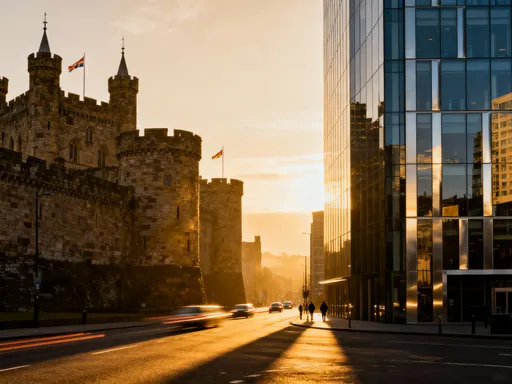
As the capital and largest city of Wales, Cardiff embodies the dynamic fusion of old and new. Its skyline tells a story in layers—medieval stone towers rise beside sleek glass structures, and Victorian arcades lead into modern shopping centers. At the heart of the city stands Cardiff Castle, a fortress with origins dating back to Roman times, later expanded by Norman invaders and lavishly restored in the 19th century by the Bute family. Encircled by green parkland and framed by high-rises, the castle is more than a tourist attraction; it’s a symbol of continuity in a rapidly changing city. Visitors often linger in Bute Park, watching swans glide across the River Taff, while just beyond, the buzz of St. Mary Street signals the city’s contemporary rhythm.
One of the most striking features of modern Cardiff is Cardiff Bay, a once-declining dockland transformed into a cultural and residential hub. The area is anchored by the Senedd, the home of the Welsh Parliament, a building celebrated for its sustainable design and open accessibility. Its sweeping wooden roof and glass walls invite natural light and public engagement, embodying the democratic values of devolved government. Nearby, the Wales Millennium Centre stands as a beacon of artistic life, its copper dome inscribed with the words “In These Stones Horizons Sing” in both English and Welsh. This performing arts venue hosts opera, dance, and theater, drawing locals and visitors alike into a shared cultural experience that celebrates Welsh creativity.
The energy of Cardiff is palpable in its neighborhoods. In the Castle Quarter, boutique shops and independent cafés thrive beneath ornate Victorian architecture. In Cardiff’s northern districts, residential streets blend Edwardian homes with community gardens and farmers’ markets. The city’s diversity is evident in its food scene—Malay restaurants in Canton, Turkish bakeries in Roath, and traditional pubs serving cawl, the national lamb stew. For families, Cardiff offers green oases like Roath Park, with its boating lake and rose garden, while young professionals gather in the lively bars of the Bay. It’s a city where history isn’t confined to museums—it’s lived, breathed, and built upon every day.
Swansea: Coastal City with a Creative Soul
Nestled along the sweeping curve of Swansea Bay, the city of Swansea offers a quieter but equally compelling urban experience. With a population of around 240,000, it maintains a human scale that makes exploration enjoyable on foot. The city’s maritime history is central to its identity—the docks once shipped coal across the world, and though that era has passed, the waterfront has been reimagined as a space for leisure, culture, and connection. The Swansea Promenade stretches for miles, offering uninterrupted views of the bay and the distant Gower Peninsula, the UK’s first Area of Outstanding Natural Beauty. At sunrise or sunset, the path glows with golden light, attracting walkers, cyclists, and dog owners who cherish this ribbon of public space.
The Maritime Quarter is Swansea’s cultural heart, where 18th- and 19th-century warehouses have been repurposed into apartments, galleries, and restaurants. The National Waterfront Museum, located here, traces Wales’ industrial and technological evolution through interactive exhibits and preserved machinery. Its modern extension contrasts with the old dock buildings, creating a dialogue between past and present. Just steps away, the Dylan Thomas Centre celebrates the life and work of Wales’ most famous poet, whose birthplace was nearby. Temporary exhibitions, poetry readings, and educational programs keep his legacy alive, especially during the annual Dylan Thomas Festival, which draws literature lovers from across the UK.
What truly sets Swansea apart is its thriving arts scene. Street art flourishes in unexpected corners—colorful murals depict local legends, seafaring history, and environmental themes. The city has embraced public art as a tool for regeneration and community pride. The annual Abacus Festival brings street performers, musicians, and food vendors to the city center, transforming ordinary streets into stages of celebration. Meanwhile, independent theaters like Taliesin Arts Centre host experimental performances and film screenings, nurturing creative expression. For families, Singleton Park offers botanical gardens, a small zoo, and a lake where children feed ducks. Swansea proves that a city can be both industrious and imaginative, grounded in history yet open to new possibilities.
Wrexham & Newport: Underrated Urban Gems
While Cardiff and Swansea capture much attention, smaller cities like Wrexham and Newport offer equally rewarding experiences for those willing to look beyond the obvious. Wrexham, located in northeast Wales near the English border, is one of the oldest towns in Wales, with a market charter dating back to 1292. Its historic core remains vibrant, with the ancient parish church of St. Giles standing as a centerpiece. In recent years, Wrexham has gained renewed visibility—not only for its passionate football club, which has attracted international investment, but for its commitment to preserving heritage while embracing change. The town’s streets are lined with Georgian and Victorian buildings, many housing independent shops, cafés, and craft breweries that reflect a growing local economy rooted in authenticity.
Newport, situated along the River Usk where it meets the Severn Estuary, has undergone one of the most dramatic urban transformations in Wales. Once known primarily for its steelworks and transportation links, Newport has reinvented itself through ambitious regeneration projects. The Riverfront Theatre and Arts Centre serves as a cultural anchor, offering performances and workshops that engage diverse audiences. The nearby Newport City Centre has seen significant investment, with new retail spaces, public plazas, and improved pedestrian access. Perhaps the most symbolic project is the restoration of the Grade II* listed Newport Market, a Victorian-era building revitalized as a hub for food vendors, artisans, and community events. These efforts have breathed new life into the city, making it a destination for both residents and day-trippers.
What makes Wrexham and Newport special is their sense of community and accessibility. Unlike larger cities, they offer a pace of life that feels manageable and welcoming. Families can explore parks like Tredegar Park in Newport, which features a boating lake, playgrounds, and walking trails. In Wrexham, the Alyn Waters Country Park provides riverside paths and picnic areas just minutes from the town center. These cities may not have the international fame of Cardiff or Swansea, but they contribute essential threads to the fabric of urban Wales. They remind us that greatness isn’t measured by size alone, but by character, resilience, and the ability to adapt with dignity.
Architectural Layers: Stone, Steel, and Street Art
The visual language of Welsh cities is rich with contrasts. Walking through any urban center in Wales, one encounters a tapestry of materials and styles—ancient stone, weathered brick, polished steel, and vibrant paint. This architectural diversity is not accidental; it reflects the nation’s journey from industrial powerhouse to creative modern society. In Cardiff, the Gothic Revival spires of Llandaff Cathedral sit just a few miles from the contemporary curves of the Cardiff Central Library, a building praised for its energy efficiency and open interior spaces. Similarly, in Swansea, the brutalist concrete of the former St. Thomas Church has been reimagined as a digital arts hub, blending preservation with innovation.
Perhaps the most expressive layer of urban Wales is its street art. Once seen as vandalism, murals are now recognized as vital cultural statements. In Cardiff’s Adamsdown district, large-scale paintings celebrate Welsh women in science, music, and politics. In Newport, a mural titled “The Embrace” depicts two figures reaching across the River Usk, symbolizing unity and connection. These works are often created in collaboration with local schools and community groups, ensuring that public art reflects local values. The city of Port Talbot, though smaller, has become known for its steel-themed murals, honoring the workers who built the town. This fusion of art and industry gives Welsh cities a distinctive visual identity—one that is both proud and forward-looking.
Architecture in Wales also tells stories of social progress. The design of public buildings increasingly prioritizes sustainability, accessibility, and inclusivity. The Senedd in Cardiff, for instance, uses locally sourced materials and generates much of its own energy through renewable systems. Libraries, schools, and community centers are being rebuilt not just for function, but for beauty and inspiration. Even former industrial sites are being reimagined—brownfield lands turned into eco-parks, old rail lines into greenways. These transformations show that urban planning in Wales is not about erasing the past, but building upon it with care and vision. The result is a built environment that feels both rooted and renewed.
Best Viewing Spots: Where to See the Skyline
To truly appreciate the beauty of Welsh cityscapes, one must seek out the best vantage points. In Cardiff, the summit of Castell Coch, a romantic 19th-century revival castle set in forested hills north of the city, offers panoramic views stretching from the urban core to the Bristol Channel. Though not in the city center, it provides a breathtaking perspective on how Cardiff nestles between river and valley. A more accessible option is the viewing platform at Mermaid Quay in Cardiff Bay, where the skyline unfolds at eye level—modern apartments, the sail-like roof of the Wales Millennium Centre, and the illuminated Senedd building all framed by water.
In Swansea, the most iconic view comes from the summit of Killay Hill or the slopes of Townhill Park, where the city cascades down toward the sea. From here, the curve of Swansea Bay is fully revealed, with the bright lights of the promenade mirroring the stars above. For a closer experience, the Liberty Stadium’s sky bar occasionally opens to the public, offering 360-degree views during special events. In Newport, the footbridge near the Celtic Manor Resort provides a dramatic riverside panorama, especially at dusk when the Usk reflects the city’s glow. Meanwhile, in Wrexham, the quiet lanes of Acton Park offer elevated views over rooftops and church spires, with the Clwydian Range forming a serene backdrop.
The magic of these cities truly comes alive at twilight. As daylight fades, streetlights flicker on, windows glow, and bridges are gently illuminated. The River Taff in Cardiff becomes a ribbon of light; the Merthyr Dyfan Cemetery in Barry, though quiet, offers distant views of the bay’s sparkle. For photographers and dreamers alike, these moments capture the soul of urban Wales—active yet peaceful, modern yet timeless. Whether from a hilltop, a riverside path, or a café with a view, taking time to witness the city at this hour is a simple pleasure with lasting impact.
Travel Tips: Making the Most of Urban Wales
Exploring the cities of Wales is both convenient and rewarding, thanks to a reliable network of public transportation. Trains connect major urban centers frequently—Cardiff to Swansea in under an hour, Newport to Wrexham with just one change. Within cities, bus services are comprehensive, and many centers are compact enough to navigate on foot. Cardiff and Swansea offer bike-sharing schemes, encouraging eco-friendly exploration. For families, stroller-friendly sidewalks and accessible public buildings make travel smooth and stress-free. Information centers in each city provide maps, event listings, and friendly advice, often in both English and Welsh.
To enrich your visit, consider pairing city time with nearby natural attractions. From Cardiff, a short drive leads to the scenic Vale of Glamorgan or the cliffs of Penarth. Swansea is the gateway to the Gower Peninsula, where coastal paths and hidden coves await. Newport sits close to the Brecon Beacons National Park, ideal for a day hike, while Wrexham offers access to the rolling hills of the Clwydian Range. This blend of urban and rural allows travelers to experience the full spectrum of Welsh life—energetic city streets by day, starlit skies in the countryside by night.
When visiting, remember to support local businesses—shop in independent stores, dine at family-run restaurants, and attend community events when possible. Many cities host weekly markets offering fresh produce, handmade crafts, and hot meals. Respecting local customs, such as using basic Welsh greetings like “Bore da” (good morning) or “Diolch” (thank you), goes a long way in building connection. Above all, approach these cities with openness. Let the architecture surprise you, let the conversations with locals enrich your understanding, and let the quiet beauty of urban Wales reshape your expectations.
Wales’ cities are not just stopovers—they’re destinations in their own right. Their skylines tell stories of resilience, reinvention, and pride. By embracing urban Wales, travelers gain a fuller, more authentic picture of this remarkable country. The next time you plan a trip, let the cityscape surprise you.