You Won’t Believe What’s Hiding in Wales — Mind-Blowing Landmarks Revealed
Wales, often overlooked for its flashier neighbors, is a treasure chest of architectural wonders. From ancient castles clinging to cliffs to futuristic structures rising from green valleys, the country tells stories through stone and steel. I set out to uncover its most striking landmark buildings — not just the famous ones, but the hidden gems locals whisper about. What I found wasn’t just history or design — it was soul. In every weathered wall and carefully restored hall, there’s a quiet strength, a sense of identity forged through centuries of change. This is not a land that shouts; it speaks in whispers, echoes, and enduring silhouettes against misty skies. And once you learn to listen, Wales reveals itself in ways few places can match.
The Soul of Stone: Why Wales’ Landmark Buildings Tell a Deeper Story
Wales is more than a country of hills and legends — it is a living archive written in architecture. Its landmark buildings are not merely structures; they are testaments to resilience, identity, and an unbroken connection to the land. The terrain itself — mountainous, coastal, and deeply green — has shaped how people built, where they settled, and what they protected. From the earliest hill forts to the grand stone chapels of the 19th century, each edifice reflects a response to both physical and cultural landscapes. The Celts left behind earthworks and standing stones, silent yet powerful. The medieval Welsh princes raised fortresses not just for defense but as declarations of sovereignty. Later, the Industrial Revolution transformed valleys into corridors of iron and fire, leaving behind monumental structures that once powered nations.
What makes these buildings emotionally resonant is not just their age or craftsmanship, but their role in the Welsh psyche. Architecture here is inseparable from language, song, and community. A chapel in a remote village isn’t just a place of worship — it’s where meetings were held, choirs rehearsed, and generations gathered. These buildings were never meant to be museum pieces; they were built to serve, to inspire, and to endure. Even today, many remain active parts of daily life, hosting events, exhibitions, or quiet contemplation. This continuity gives Wales a unique sense of timelessness — the past isn’t buried, it’s woven into the present.
The emotional weight of these places comes from authenticity. Unlike some destinations where heritage is commercialized or sanitized, Wales preserves its landmarks with reverence, not spectacle. There’s a humility in how these sites are presented — minimal signage, no forced narratives, just space to observe and feel. A crumbling abbey isn’t hidden behind ropes; you can walk among its arches, touch its moss-covered stones, and imagine centuries of footsteps. This intimacy allows visitors to form personal connections, making the experience not just educational, but transformative.
Castles That Defy Time: Beyond the Obvious Beauty
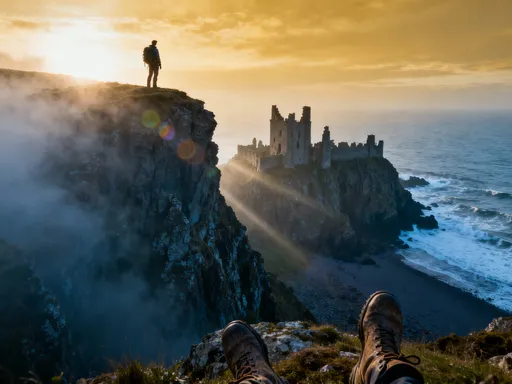
With over 600 castles, Wales holds more per square mile than any other country in Europe. But these are not mere ruins or romantic backdrops for photos. They are masterpieces of military engineering, political ambition, and cultural memory. The most famous among them — Caernarfon, Conwy, and Beaumaris — form part of Edward I’s Iron Ring, a series of fortifications built in the late 13th century to subdue Welsh resistance. Today, they stand as UNESCO World Heritage Sites, not only for their architectural precision but for their role in shaping British history. What many visitors don’t realize is that these castles were designed to impress as much as to defend. Their towering walls, polygonal towers, and imposing gatehouses were meant to convey invincibility — and they still do.
Caernarfon Castle, with its banded stonework and eagle-topped turrets, was intended to evoke the walls of Constantinople, linking Edward I’s rule to imperial grandeur. Inside, the Great Hall and royal apartments speak of power and ceremony, while the dungeons below remind us of the cost of conquest. Conwy Castle, dramatically perched above the estuary, offers one of the most complete medieval defenses in Britain, with eight towers and a gatehouse that has withstood storms and sieges alike. Beaumaris, though never fully completed, is considered the pinnacle of concentric castle design, where every wall, tower, and moat served a strategic purpose. Walking through these sites, one gains a visceral sense of medieval life — the cold stone, the narrow spiral stairs, the view from the battlements that once scanned for enemies across the sea.
But beyond their military significance, these castles have become symbols of Welsh endurance. Though built by English kings to suppress rebellion, they are now proudly claimed as part of the national heritage. Schoolchildren visit them on field trips, families picnic in their shadows, and local historians offer guided tours in both Welsh and English. This reclamation of history is powerful — it shows how architecture can be repurposed, not just physically but emotionally. These castles no longer represent oppression; they represent survival, memory, and a shared identity that has outlasted empires.
Industrial Giants Reborn: From Coal to Culture
The soul of modern Wales was forged in fire and soot. During the 18th and 19th centuries, the south Wales valleys became the engine room of the British Empire, producing coal, iron, and steel that powered industry across the world. The legacy of that era is still visible in the skeletal remains of pit heads, the red-brick viaducts, and the massive ironworks that once dominated the landscape. But rather than erase this industrial past, Wales has chosen to preserve and repurpose it, turning former sites of labor into centers of culture, education, and remembrance.
One of the most powerful examples is the Big Pit National Coal Museum in Blaenavon. Once a working mine where men and boys descended 300 feet into the earth, it now offers visitors the rare opportunity to go underground with a former miner as a guide. The experience is not sanitized — you wear a helmet, clip on a lamp, and ride the cage into the darkness, just as miners did for generations. Above ground, the preserved workshops, winding gear, and pit baths tell the story of a community built around coal. What makes Big Pit so moving is its authenticity; it’s not a simulation, but a real place where history lives in the air, the tools, and the voices of those who worked there.
Another transformation can be seen at Cyfarthfa Castle in Merthyr Tydfil, once the mansion of an ironmaster and now a museum dedicated to the town’s industrial heritage. The castle’s grand halls, originally designed for balls and banquets, now house exhibits on workers’ lives, union movements, and technological innovation. Its surrounding park hosts outdoor concerts and family events, turning a symbol of wealth into a space of public joy. Similarly, the Llanelli Steelworks site has been redeveloped into a sustainable business park, with old structures integrated into new designs, proving that progress doesn’t require erasure.
These rebirths reflect a deeper truth: Wales honors its working-class roots. The people who built these industries were not forgotten; their stories are told with dignity and respect. By preserving these sites, Wales ensures that future generations understand the sacrifices made for progress — and the value of community in the face of hardship.
Modern Marvels in a Wild Landscape
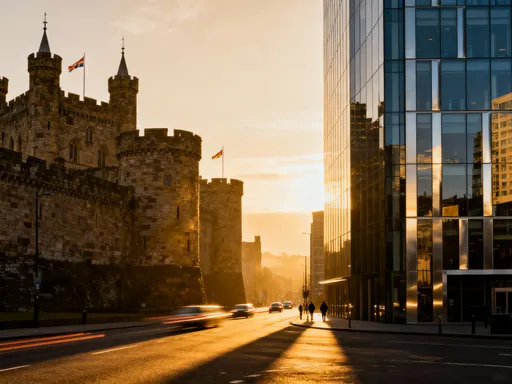
While Wales is often associated with ancient ruins and rural charm, it is also home to bold contemporary architecture that dares to engage with its dramatic natural surroundings. These modern buildings do not imitate the past; they respond to it, creating dialogues between tradition and innovation. In cities like Cardiff and Swansea, sleek glass structures stand alongside historic stone facades, not in competition, but in conversation. The result is a landscape where the old and new coexist with surprising harmony.
One standout is the Cardiff Central Library, a striking building opened in 2009 that combines sustainability with striking design. Its angular, honeycomb-like façade is both functional and symbolic — the hexagonal pattern references Welsh craftsmanship, from quilting to slate work, while also optimizing natural light and insulation. Inside, the open-plan layout encourages exploration and connection, with reading areas flooded with daylight and community spaces that host talks, exhibitions, and children’s programs. Unlike traditional libraries that feel formal or restrictive, this one feels alive, welcoming, and deeply integrated into city life.
Another example is the Maggie’s Centre in Swansea, a cancer care facility designed by architect Amanda Levete. Nestled in the grounds of Singleton Hospital, the building is a study in calm and clarity. Curved wooden walls, a green roof, and floor-to-ceiling windows create a sanctuary that feels more like a home than a medical facility. Every detail — from the choice of materials to the flow of space — was designed to reduce anxiety and promote healing. The center is not just beautiful; it’s functional in the deepest sense, offering emotional support through architecture.
These modern landmarks prove that Wales is not trapped in nostalgia. It embraces innovation while staying rooted in place. Architects here are not importing foreign styles; they are responding to local conditions — the weather, the light, the cultural memory — to create buildings that feel inevitable, not imposed. In doing so, they show that progress need not mean loss, and that the future can be built with respect for the past.
Sacred Spaces: Chapels, Abbeys, and Quiet Power
Long before steel framed skyscrapers, the Welsh reached for the sky with stone and faith. The country’s spiritual architecture — from grand abbeys to humble village chapels — speaks of a deep, enduring relationship with the divine and with community. These are not just relics of a bygone era; many remain active places of worship, gathering, and reflection. Their quiet presence across the landscape — on hilltops, beside rivers, tucked into valleys — gives Wales a contemplative rhythm, a sense of stillness amid motion.
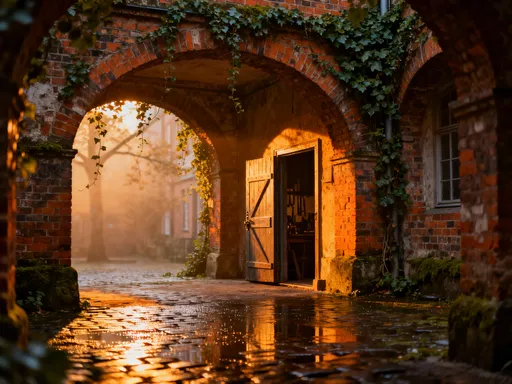
Tintern Abbey, one of the most photographed ruins in Wales, stands as a haunting testament to medieval monastic life. Founded in 1131, it was once home to Cistercian monks who lived in silence, prayer, and agricultural labor. Though roofless and open to the elements, the abbey’s skeletal arches, rose window, and cloister walls remain breathtaking in their symmetry and grace. Ivy climbs the stone, trees grow between the pillars, and light filters through broken windows, creating a scene that feels both sacred and natural. Visitors often speak of a deep peace here — not because it’s preserved perfectly, but because it’s allowed to age with dignity, returning slowly to the earth.
Equally powerful are the Nonconformist chapels that dot rural Wales. Built during the 18th and 19th centuries, these plain stone buildings with tall steeples were centers of religious, social, and cultural life. In villages where there was no town hall or library, the chapel was the heart. It hosted debates, concerts, and community meetings. The Welsh choral tradition — one of the nation’s proudest cultural achievements — was born in these spaces. Many of these chapels are still used today, though some have been converted into homes, studios, or small museums. Even in repurposing, their spiritual essence lingers — in the acoustics, the high ceilings, the sense of upward aspiration.
These sacred spaces remind us that architecture can serve the soul as much as the body. They were built not for grandeur, but for meaning. In a world that often values speed and spectacle, they offer a counterpoint — slow, quiet, and deeply human.
Off-the-Beaten-Path Gems: Discovering the Unexpected
Beyond the guidebooks and tourist trails, Wales hides architectural wonders that surprise and delight. These are not the most famous sites, but often the most memorable — places that reward curiosity, a sense of adventure, and a willingness to wander. They prove that discovery is still possible, even in a well-traveled country.
One such gem is the Trwyn Du Lighthouse on Anglesey, a 19th-century tower that has been transformed into an artist residency and exhibition space. Perched on a rocky outcrop where the Irish Sea meets the Menai Strait, it’s accessible only at low tide. Inside, the compact living quarters and lantern room now host rotating art installations that respond to the sea, isolation, and light. Staying overnight here is a rare privilege — to sleep where keepers once watched storms roll in, now with the added wonder of contemporary art.
Another hidden marvel is Theatr Felinfach, a converted 19th-century water mill in the Ystrad Tywi Valley that now serves as a theater and arts center. Nestled beside a rushing stream, it hosts Welsh-language plays, music performances, and community workshops. The building retains its original stone walls and wooden beams, blending seamlessly into the countryside. Its charm lies in its intimacy — audiences sit close to the stage, and the sound of water flows beneath the floor, becoming part of the performance.
Then there’s the Treehouse Theatre at Coed Morfa in Pembrokeshire, a whimsical structure built among the branches of ancient oaks. Designed for children’s storytelling and nature workshops, it blends playfulness with craftsmanship. From a distance, it looks like something out of a fairy tale; up close, it’s a testament to sustainable building and creative reuse of space. These lesser-known sites may not draw thousands, but they capture the spirit of Wales — inventive, rooted, and quietly magical.
How to Experience These Landmarks Like a Local
To truly appreciate Wales’ landmark buildings, it’s best to travel slowly, thoughtfully, and with an open mind. Rushing from castle to chapel to museum misses the point. These sites are not checklist items; they are invitations to pause, reflect, and connect. The best way to experience them is to treat each visit as a conversation — with history, with place, and with the people who care for these spaces.
Timing matters. Summer brings longer days and festivals, but also crowds. Spring and autumn offer milder weather, fewer tourists, and landscapes painted in soft greens or golden hues. Early mornings are ideal for photography and quiet contemplation, especially at popular sites like Conwy or Tintern Abbey. Weekdays are generally less busy than weekends, and visiting during the shoulder seasons can make a big difference in comfort and atmosphere.
Transportation options vary, but public transit in Wales is more extensive than many realize. The scenic Vale of Glamorgan and Heart of Wales railway lines offer breathtaking views and stop near key landmarks. Many castles and museums are accessible by bus or within walking distance of train stations. For more remote sites, renting a car provides flexibility, but consider using park-and-ride options to reduce environmental impact and avoid congestion in historic towns.
When planning your route, group sites by region. North Wales offers a concentration of castles — Caernarfon, Conwy, and Harlech are within an hour’s drive of each other. South Wales is ideal for industrial heritage, with Big Pit, Cyfarthfa Castle, and the Rhondda Heritage Park forming a meaningful circuit. Mid Wales, often overlooked, is home to tranquil abbeys, quiet chapels, and hidden architectural gems waiting to be discovered.
Engaging with local guides can deepen your experience. Many sites offer volunteer-led tours where storytellers share personal connections to the place — a grandfather who worked in the mine, a childhood memory of chapel choir. These moments transform history from facts into feeling. Additionally, respecting preservation rules — staying on paths, not touching fragile surfaces, keeping voices low — ensures these sites remain intact for others.
Finally, allow time for stillness. Sit on a bench inside a ruined abbey. Walk the ramparts of a castle at sunset. Listen to the wind through the trees around a mountain chapel. These moments of quiet are where the true spirit of Wales reveals itself — not in grand statements, but in the quiet strength of stone, memory, and place.
Architecture as a Living Conversation
Wales’ landmark buildings are not frozen in time — they are part of an ongoing dialogue between past and present. Each structure, whether ancient or modern, tells a story not just of how people lived, but of what they valued, feared, and dreamed. To walk through these spaces is to participate in that conversation, to add your own footsteps to centuries of others. These buildings do not belong to history alone; they belong to those who visit, preserve, and remember.
What makes Wales extraordinary is not just the number of its landmarks, but their emotional depth. They are not curated for spectacle, but preserved with care and humility. They invite not just sightseeing, but reflection. In a world that often moves too fast, Wales offers a different pace — one where architecture slows us down, opens our hearts, and reminds us of what endures.
By visiting these sites with curiosity and respect, travelers do more than witness history — they become part of its next chapter. The stones remember. The valleys echo. And in the quiet spaces between, Wales speaks — not loudly, but clearly, to those willing to listen.